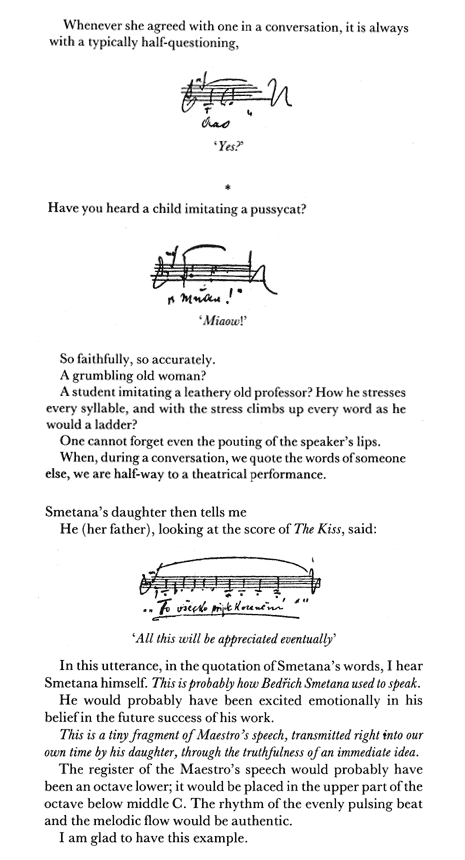
Nineteenth-century Czech composer Leos Janáček was fascinated by what he termed speech melody – the inflections, timings and frequencies of people’s spoken phrases, which he notated and used as source material for his music.
(The below are scans from Janáček’s Uncollected Essays On Music, selected, edited and translated by Mirka Zemanová.)
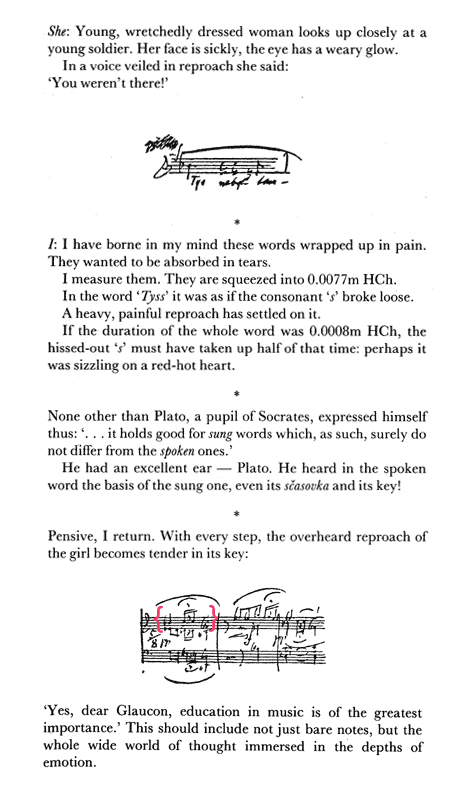
Below you can see his notation of an emotional young woman’s exchange with a man who has let her down. We then see how Janáček analyses this and then uses it as the melody (show in pink brackets) in a musical passage.
Sonic branding relies heavily on our ability to relate musical phrases to speech patterns (and therefore emotion). Take Walter Werzowa’s sonic logo for Intel.
Its short melody moves in leaps rather than stepwise motion (“open”), is played on a synth (“precise”, as opposed to a voice for example), and travels upward at the end like a spoken question (“inquisitive”). The features in this mnemonic all serve to underline the brand’s values; family-friendly, technologically advanced, with an investment in learning. It even sounds a little joyous, as the final leap (a fifth) is heraldic, like a trumpet fanfare. And of course we mentally sing “In-tel in-side” to the four notes of the tune. (Well I do)