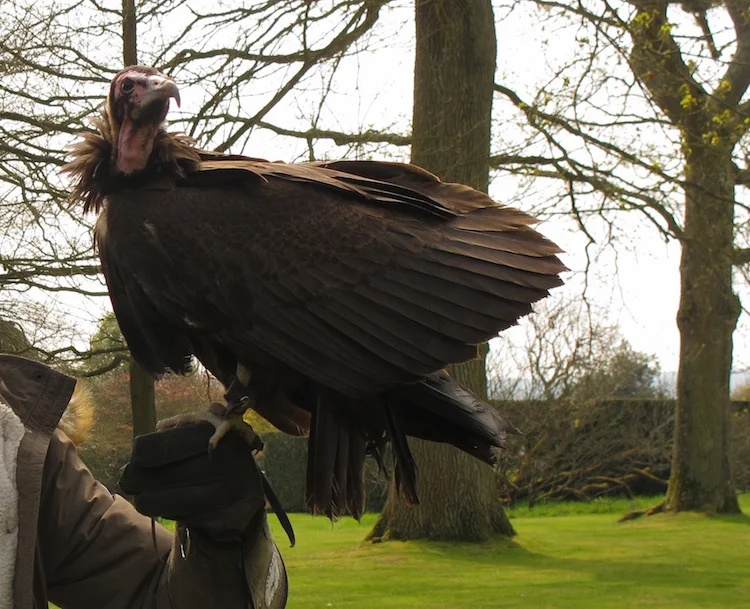
Last Friday I did some falconry with The Hawking Centre. One of the birds we met and flew was Morticia the hooded vulture—here she is in the photos. Our falconer Katie declared the vultures to be her hands-down favourites, over and above the majestic eagles, savvy harris hawks and fluffy barn owls. She’s taken it upon herself to change people’s perceptions of this misunderstood bird, portrayed in myriad cartoons as the opportunistic, stubble-headed baddie, beak red with entrails.
We had to fly Morticia from one person to another (as opposed to between trees and distant landing posts, like the other birds), because left to her own devices she will trot along the ground behind you like an obedient puppy. When Morticia is fetched from her aviary, gets her dinner or enjoys hugs with her favourite falconer, she blushes bright pink. You can see this in the picture above.
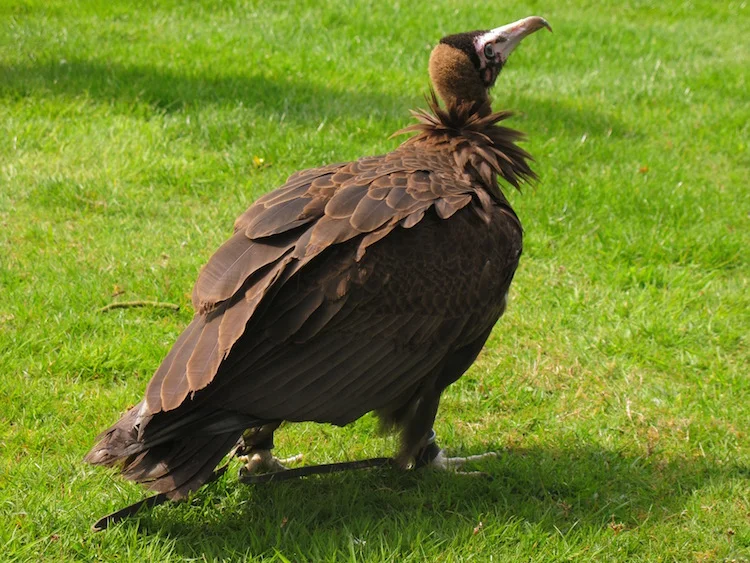
In the wild, the vulture has a crucial role: clearing up diseased carrion. Apparently they can eat carcasses infected with TB, cholera, even anthrax bacteria and be completely unaffected, halting the spread of these potentially fatal diseases. They very rarely attack healthy or living animals. Also they have a super-cute running style and very fancy neck plumage.
So there you have it, the case for the misunderstood scavenger.